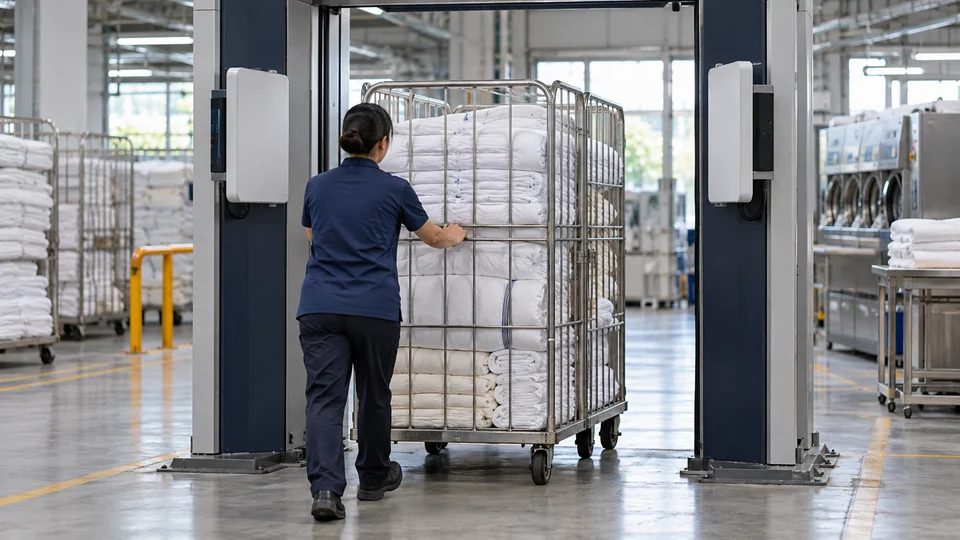
Bulk reading
Identify multiple tags within the tested read zone, reducing individual scans.
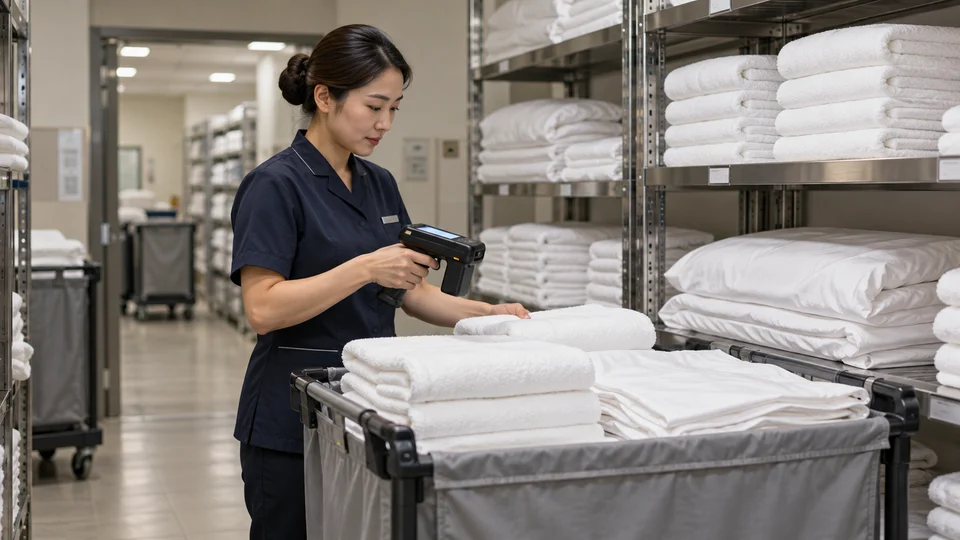
Tag linen, assets or logistics containers and use readers with management software to record counts and transfers. Test real items before choosing a reading method.
Identify multiple tags within the tested read zone, reducing individual scans.
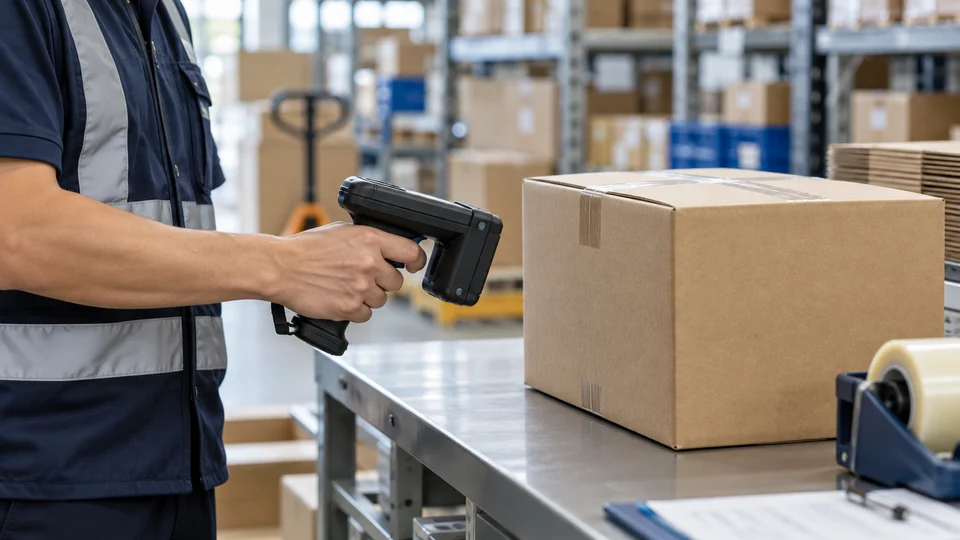
No need to aim at each barcode. Materials, placement and environment affect performance; sample testing is required.
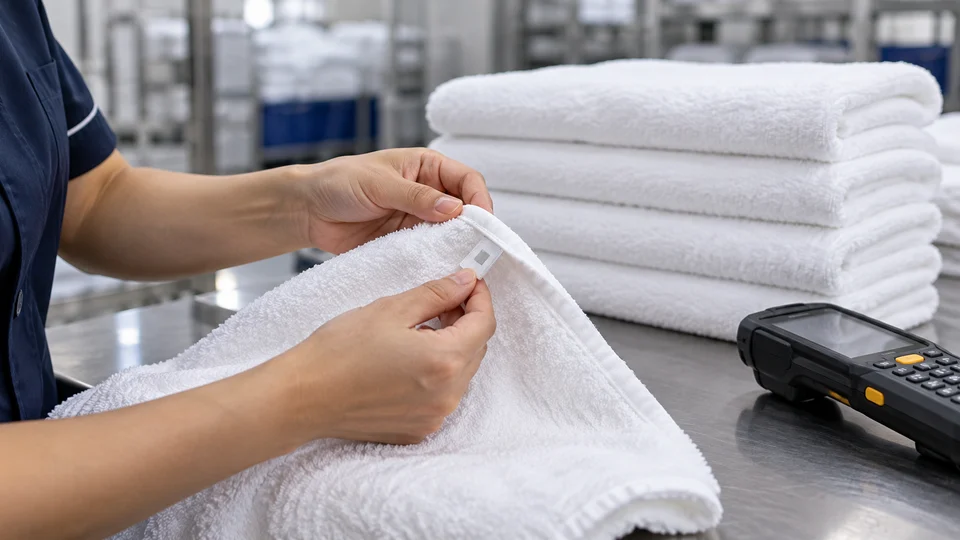
Each tag has a unique number, so even ten bed sheets of the same style can be told apart, and you can record how many times each has been washed and where it is now.
Illustrations show the workflow only; actual screens and functions depend on each project.
Situations with large quantities, repeated counts and items that are hard to pull out one by one. Below are 24 common applications, listed by sector.
These are application examples. Test materials, tag placement and read zones; system features are planned per project.
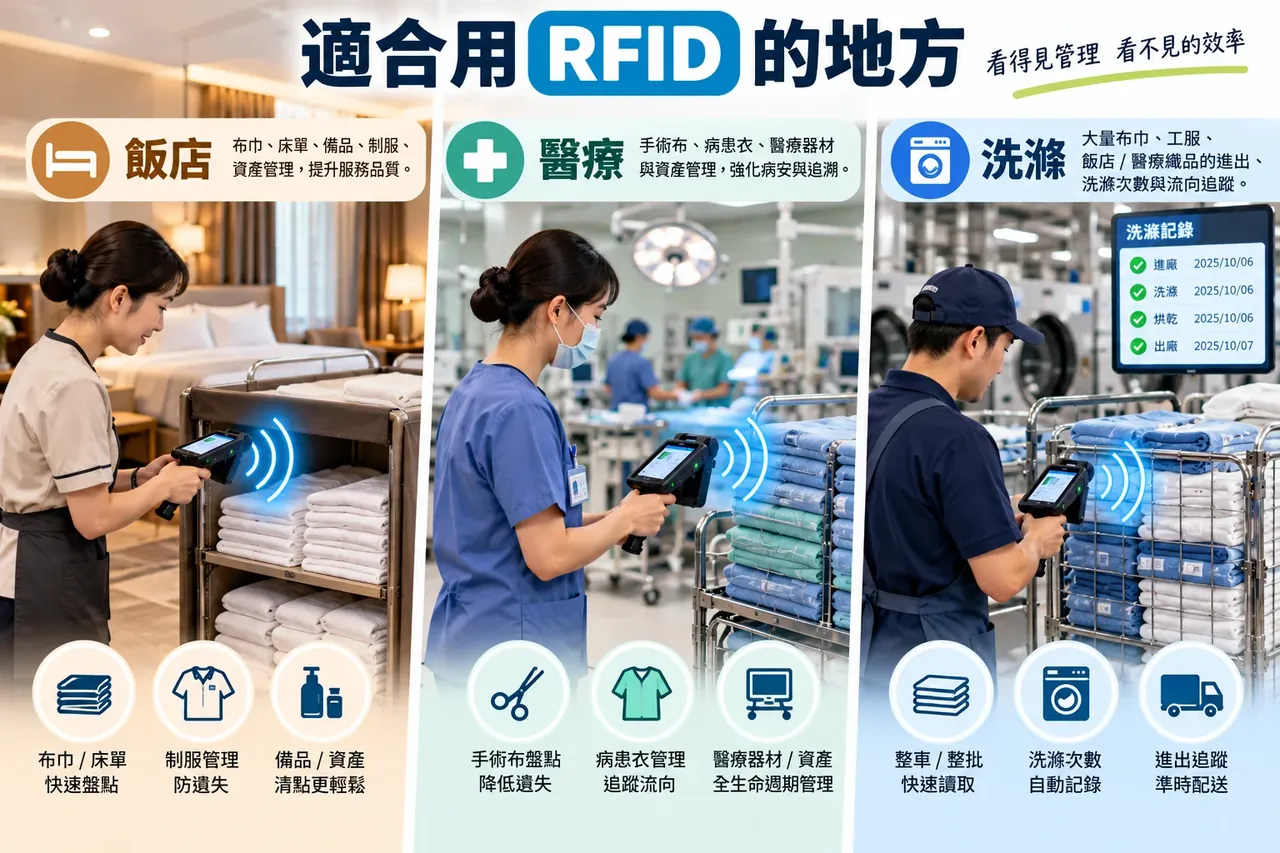
Bed sheets and bath towels move between guest rooms, the laundry and storerooms. They are counted in bulk when sent out and returned, and each item's wash count is recorded.
Tags are attached to or sewn into instrument trays, medical devices and ward linen to record location, use and wash counts.

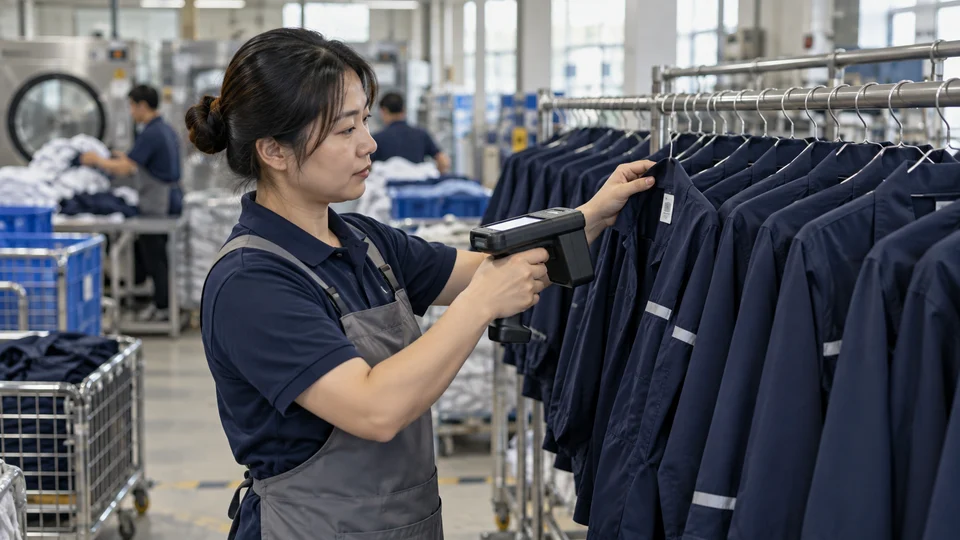
Wash-resistant tags are sewn into uniforms and cleanroom garments. Issue, dispatch to laundry and return are checked in bulk, and the wash count of each item is recorded.
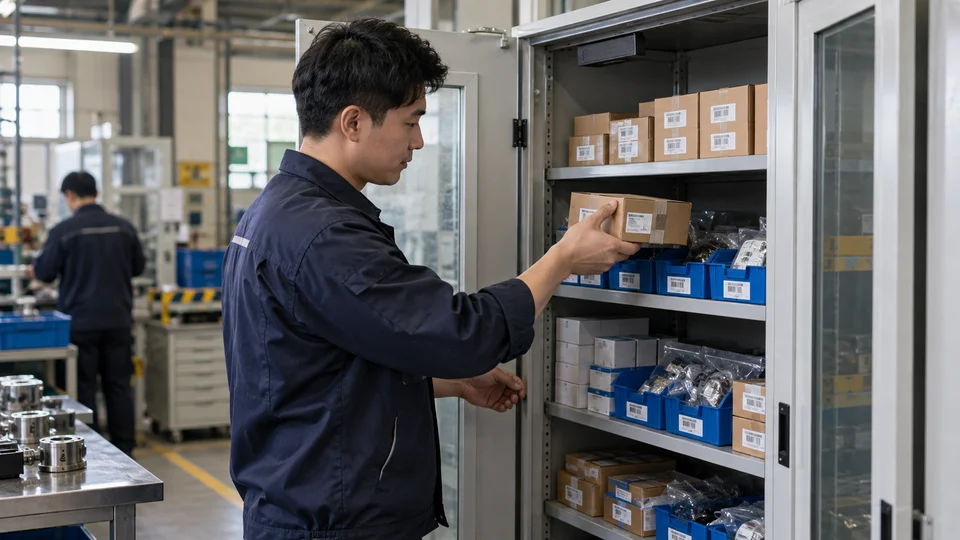
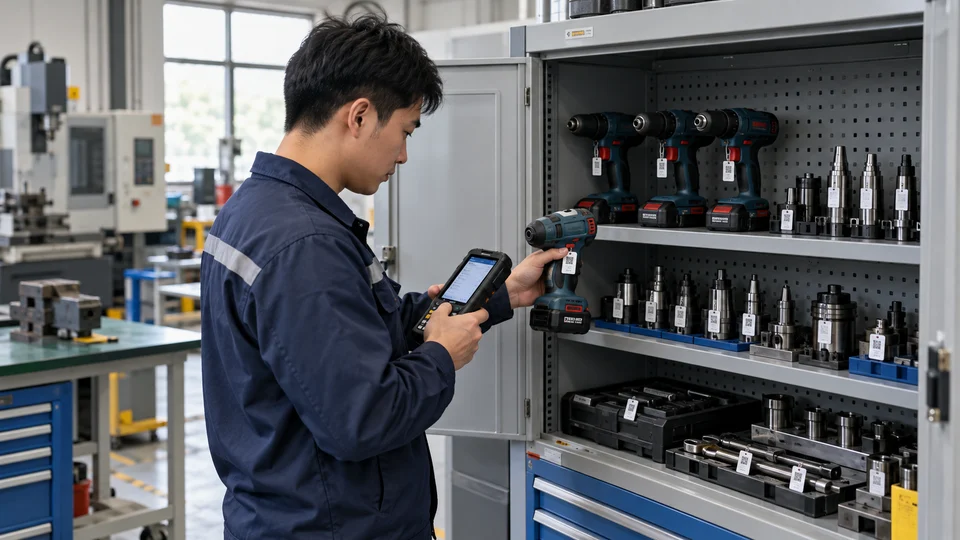
High-value consumables and spare parts are kept in a cabinet fitted with a reader. Removal and return are recorded automatically, and stock quantities can be checked at any time.
Who borrowed it, when it was returned and which cabinet it is in are recorded automatically at check-out and return.
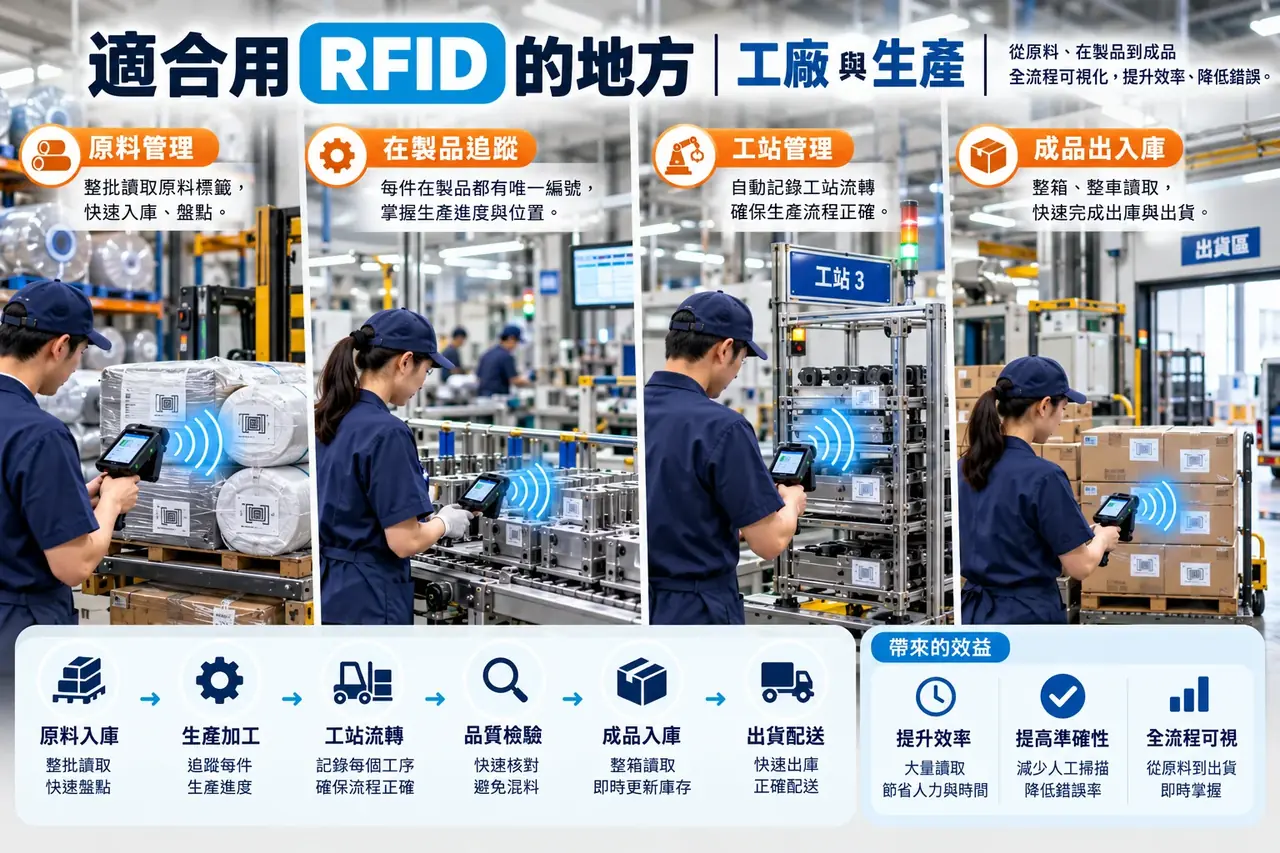
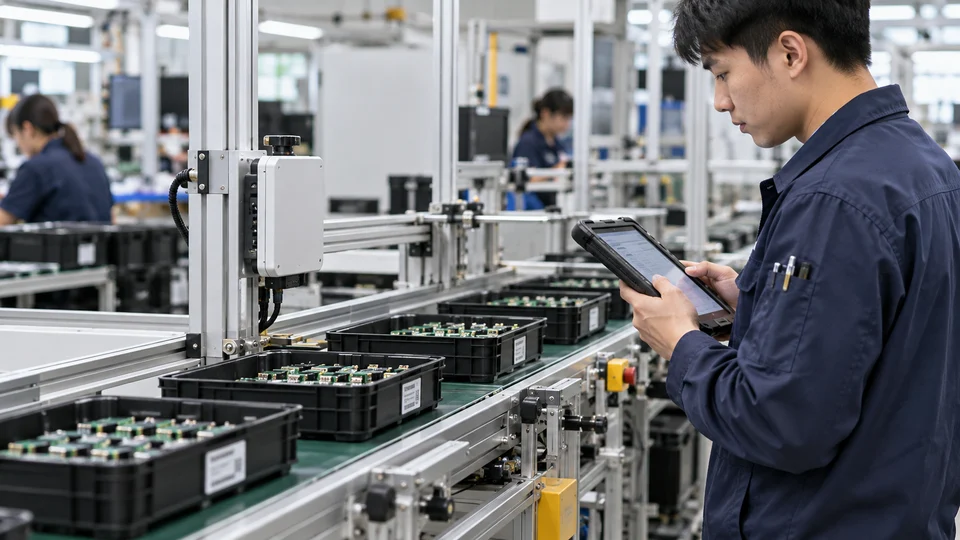
Carriers or workpieces carry tags past the read points at each station, so progress is recorded automatically, with no manual scanning station by station.
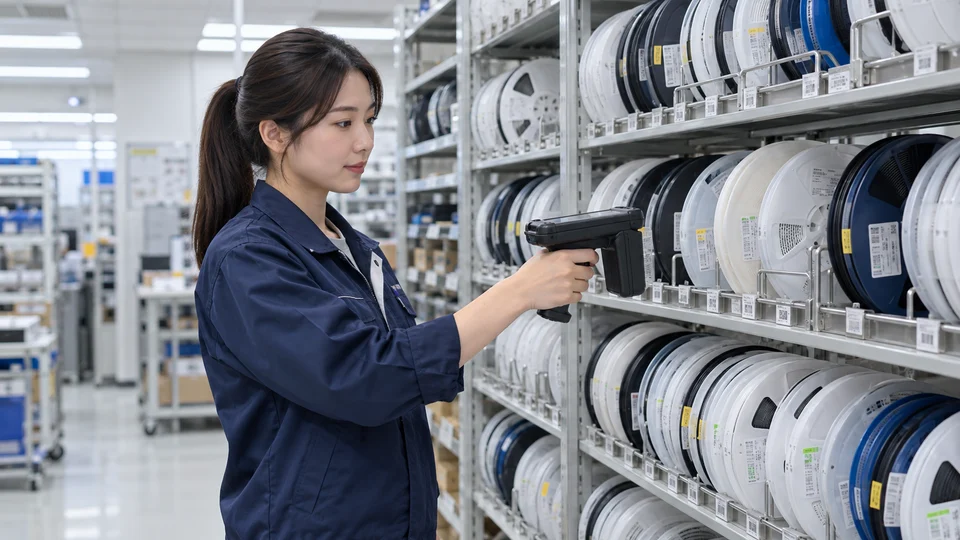
Trays and reels are tagged. Material issue, return and line loading are recorded automatically, making it faster to find materials and count stock.
Tags are placed on equipment or inspection points. A check counts as complete only when staff read the tag on site, leaving a record of the time and the person.

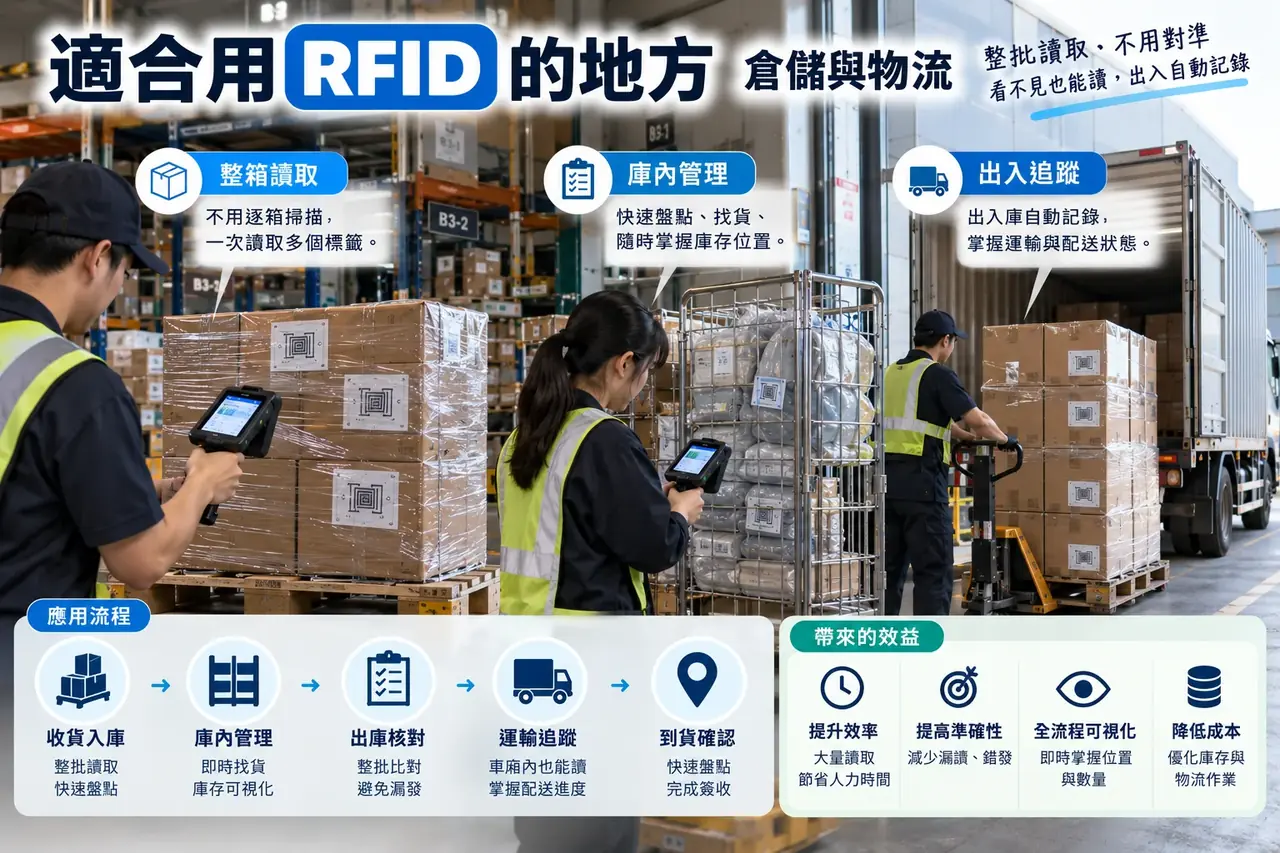
Pallets and totes are recorded automatically as they pass the reader at the door, with no need to scan box by box.
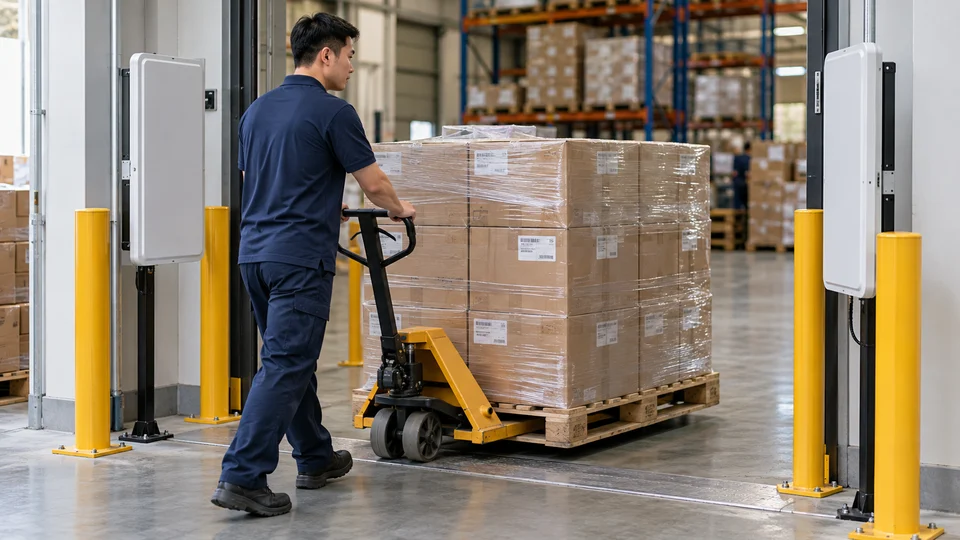
Reusable containers such as totes, roll cages and pallets are recorded automatically on the way in and out, so you know how many are out and at which site.
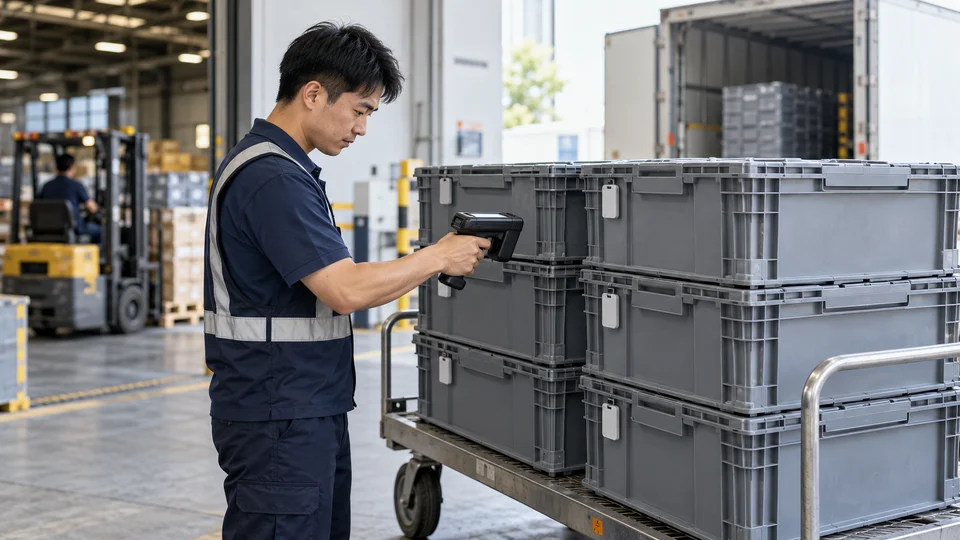
Without opening the carton, the whole carton is read in one pass to verify that the items and quantities inside match the shipping order.
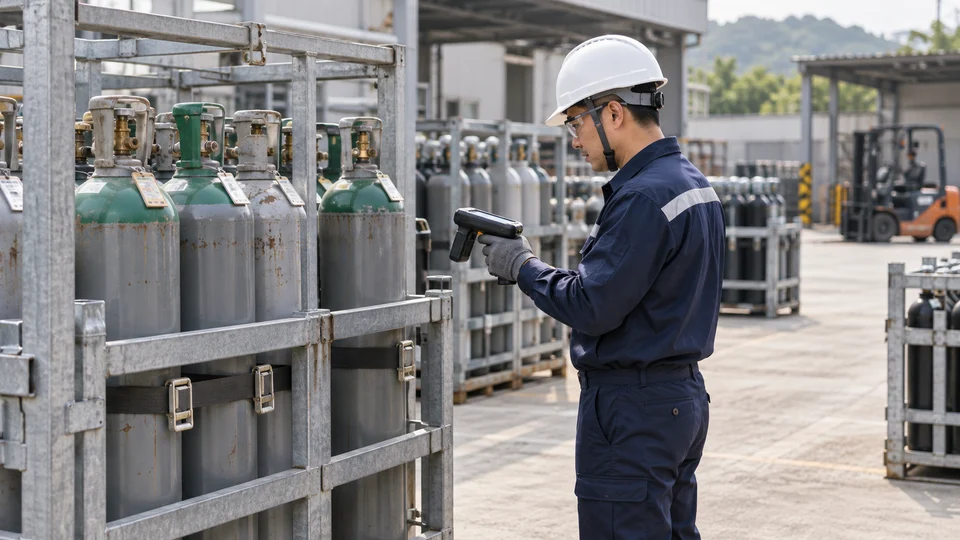
For gas cylinders, rental equipment and other items that circulate off site, rental, return and inspection dates are recorded item by item.
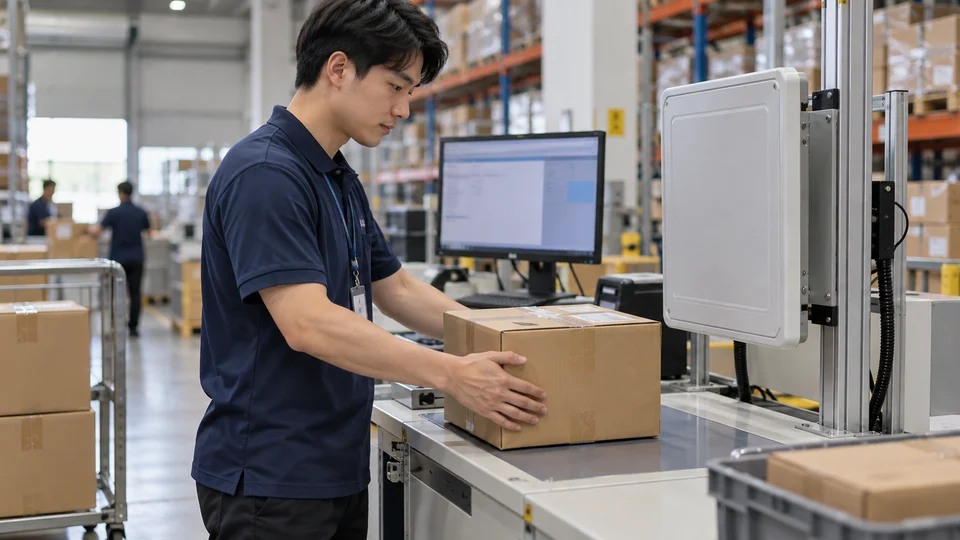
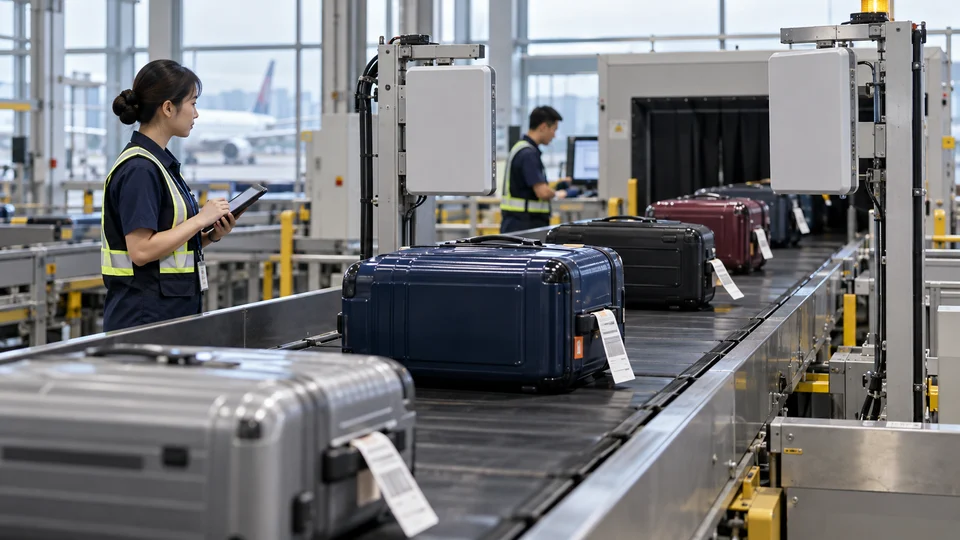
Parcels and baggage carry tags and are identified and diverted automatically as they pass read points on the conveyor, with no manual aiming and scanning.
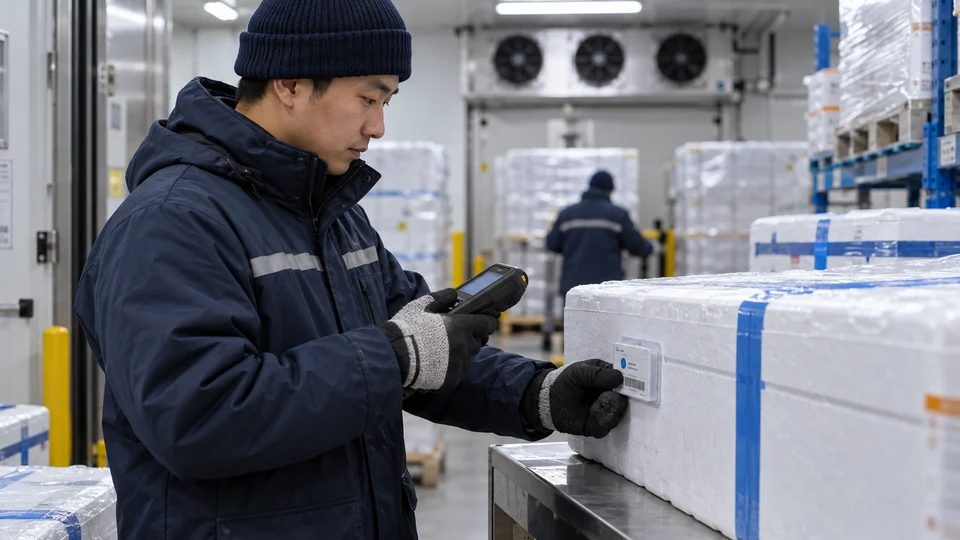
Tags with temperature sensing travel with the goods. Reading them on arrival shows the temperature record during transit.
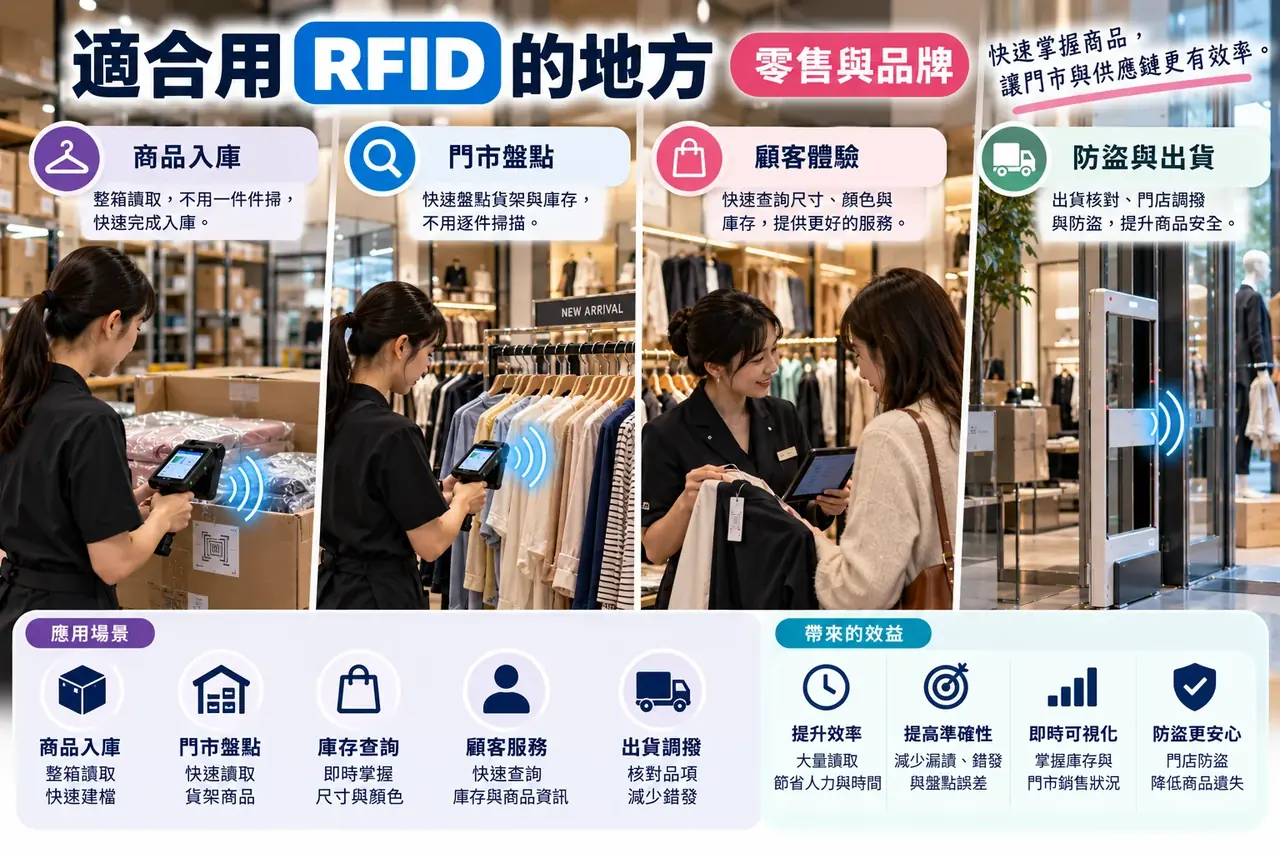
Apparel, footwear and other goods carry RFID hang tags. Walk along the shelves once with a handheld reader to count stock, and replenish and find items faster.

Jewelry, samples, molds and other high-value items are numbered individually. A whole tray or cabinet is read in one pass to quickly check whether anything is missing.

Each product has a unique number, so its origin and movement can be traced from the factory through sales channels to after-sales.

Items placed on the checkout counter are read in one pass. Unpaid items trigger an alert when they pass the door.

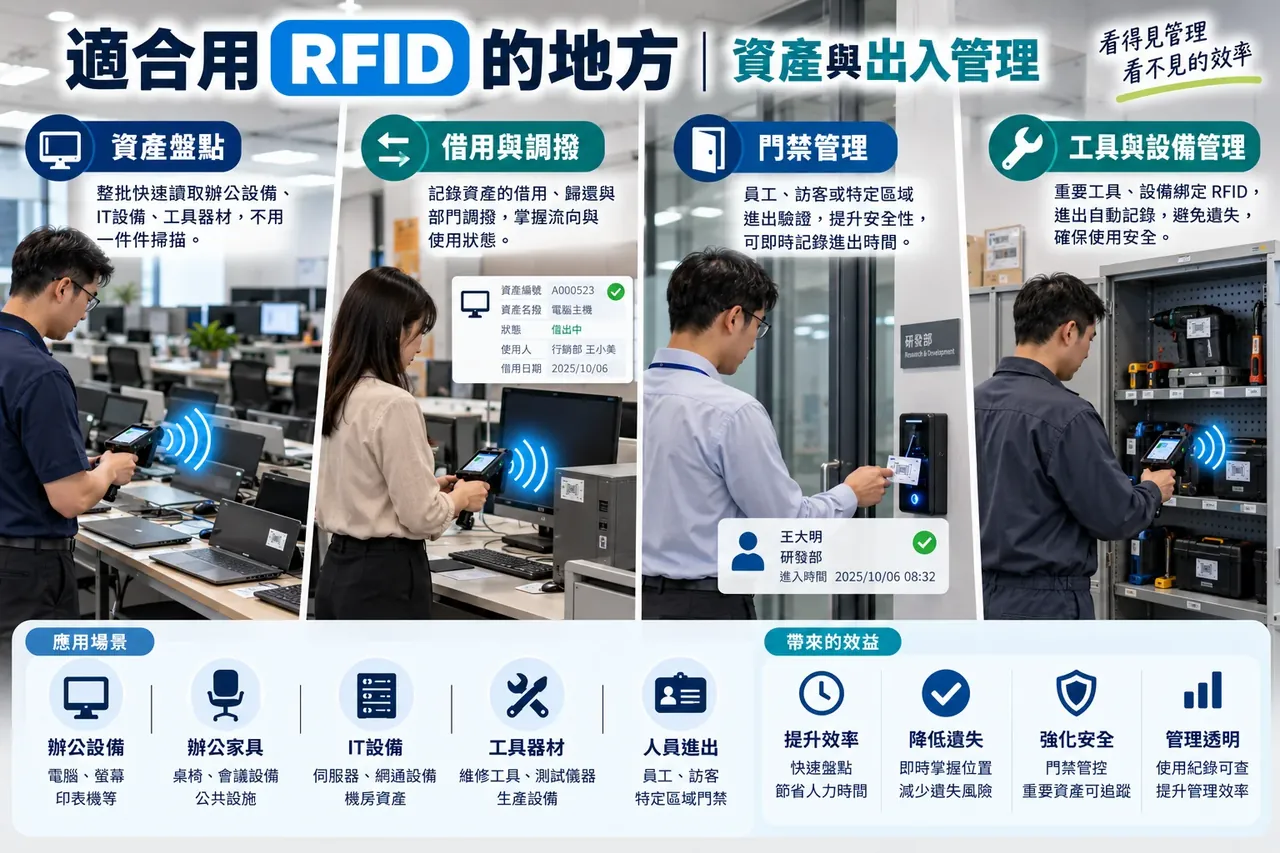
Tag computers, instruments, fixtures and equipment, then walk around once with a handheld reader to complete the count and see at a glance what is missing.

File folders and books are tagged. Borrowing and return are recorded automatically, and misplaced files can be located.

Vehicles or ID badges are fitted with tags and are identified and logged automatically as they pass entrances and exits.
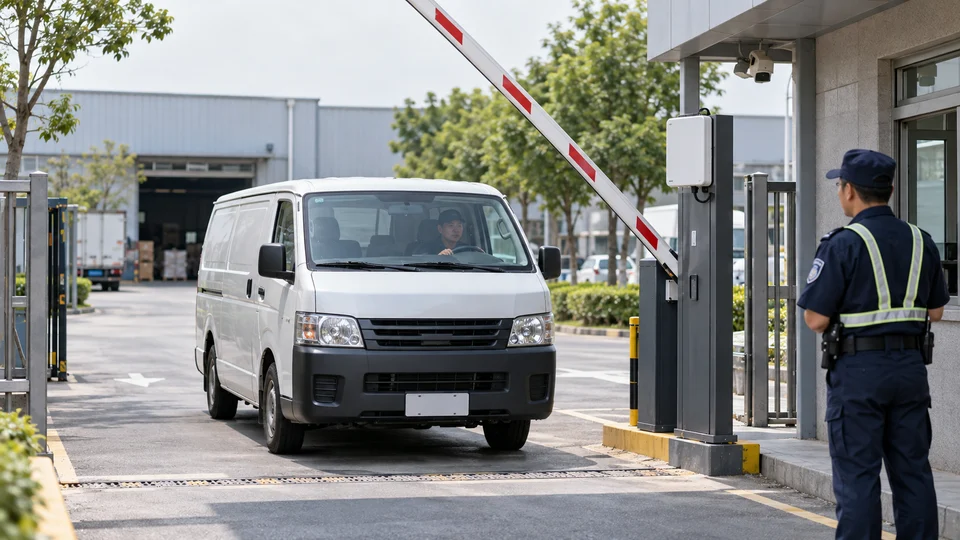
Assets or controlled items are detected automatically as they pass entrances and exits. Unregistered removal can trigger an immediate alert.

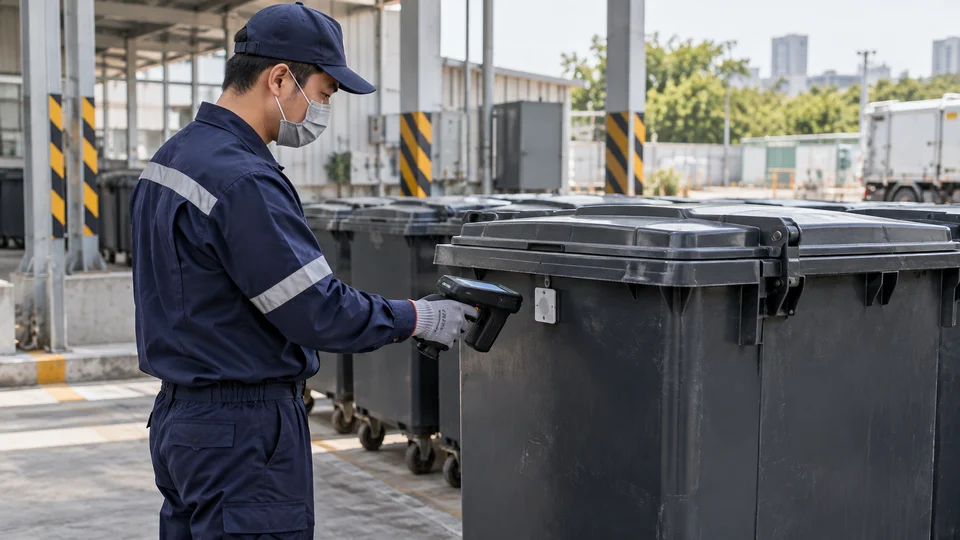
Containers of industrial and medical waste are numbered one by one, and a record is kept at each stage: collection, handover and treatment.
Tickets and badges contain a tag. Reading it at the entrance completes ticket validation and check-in, and headcounts per zone can be tallied.

Depending on the reader, antenna, tag and environment, anywhere from a few centimeters to more than ten meters. First establish what you need to read and where, then choose the equipment and tags.
According to equipment specifications, UHF RFID can read several hundred tags or more per second. The actual number is affected by how items are placed, the packaging material and the environment.
RFID tags cost more than barcodes. They suit situations with repeated inventory counts, large quantities, or items that are hard to pull out one by one. Many sites use barcodes and RFID together, each where it fits best.
Metal and liquids affect reading, so suitable tags and antenna positions are needed; the read zone can be adjusted. That is why testing on site with the actual items is essential.
Yes, and it is very common. For example, cartons carry barcodes while pallets or high-value items use RFID, and the system manages both together.
Linen uses laundry tags that withstand washing and high temperatures, which are different from ordinary adhesive labels. Which type to use depends on the laundering conditions on site, and we confirm this during the on-site assessment.
Metal, liquids and item placement all affect reading. Once your requirements are confirmed, we will arrange to bring readers and sample tags for on-site testing.
Ask about RFID implementation →